<?xml version="1.0" encoding="utf-8"?><feed xmlns="http://www.w3.org/2005/Atom" ><generator uri="https://jekyllrb.com/" version="3.10.0">Jekyll</generator><link href="http://www.positiveenergyblog.com/feed.xml" rel="self" type="application/atom+xml" /><link href="http://www.positiveenergyblog.com/" rel="alternate" type="text/html" /><updated>2025-02-19T14:05:41+00:00</updated><id>http://www.positiveenergyblog.com/feed.xml</id><title type="html">PositiveEnergy</title><subtitle>This blog is a place to find answers to your battery questions! I&apos;ll do my best to help you.</subtitle><entry><title type="html">Organic batteries</title><link href="http://www.positiveenergyblog.com/2025/02/19/OrganicBatteries.html" rel="alternate" type="text/html" title="Organic batteries" /><published>2025-02-19T00:00:00+00:00</published><updated>2025-02-19T00:00:00+00:00</updated><id>http://www.positiveenergyblog.com/2025/02/19/OrganicBatteries</id><content type="html" xml:base="http://www.positiveenergyblog.com/2025/02/19/OrganicBatteries.html"><![CDATA[<p>I have been previously working with different organic electronics applications, such as organic photovoltaics and organic transistors. Both have been commercialized, by companies like <a href="https://www.asca.com/">ASCA</a> and <a href="https://www.flexenable.com/">Flexenable</a>. It is great to see that it has been possible to scale up the production of these unique materials and applications, which can help to increase sustainability of the electronics industry and enable new shapes and appearances for the devices.</p>

<p>Our team is currently working with organic battery materials in the ongoing <a href="https://www.finnceres.fi/">FinnCERES project</a>, funded by the Research Council of Finland. However, I had not found any company who has commercialised the production of organic batteries until I visited the Battery Show in Detroit last October. There, I heard a keynote talk by Mike Nagus from <a href="https://www.linovaenergy.com/">LiNova Energy</a>. His talk was one of the highlights of the show for me, as it was great to see that it is possible to produce organic cathode active materials in a reliable way.</p>

<h2 id="what-is-an-organic-battery">What is an organic battery</h2>
<p>Organic materials are carbon-containing compounds and batteries already contain several of those, for example as binders. However, an organic battery usually refers to a cell where the cathode active material, or in some cases both electrodes, are organic.</p>

<p>In a conventional Li-ion battery, the cathode active material is an inorganic compound, such as lithium iron phosphate (LFP) or lithium nickel manganese cobalt oxide (NMC). In an organic battery, this inorganic electrode material is replaced with an organic one. However, the electrolyte may still contain Li-based or other metal-containing salts.</p>

<p>The most common anode material in batteries is graphite, which is not organic, even though it is a crystalline allotrope of carbon. This is since carbon should have bonds with hydrogen or other elements to be classified as organic. Organic batteries may use a graphitic anode, but they could also have a metallic or other type of anode. Usually, an organic battery is not 100% organic.</p>

<p>Note also that organic is not the same as renewable or biobased. Organic materials can be biobased, but they can be also made from fossil sources.</p>

<h2 id="benefits-of-organic-cathode-materials">Benefits of organic cathode materials</h2>
<p>To be clear, let’s focus only on the organic cathode active materials. Their main benefit is that they are not mined and can be produced from abundant materials. In addition, they can be produced with a significantly lower carbon footprint when compared to the traditional inorganic options.</p>

<p>Organic materials can also offer other benefits, such as flexibility. As most of the organic cathodes are not that prone to cracks, they could be used in applications where the battery needs to cope with bending or even stretching. Due to their light weight, organic batteries may also provide high gravimetric energy density.</p>

<p>In general, it is good to have different options for battery materials. This way we are not too dependent on one material, which helps in producing enough batteries for multiple purposes and overcome issues with material availability, sustainability and price.</p>

<h2 id="challenges">Challenges</h2>
<p>As every battery material, organic materials have their challenges and limitations too. This is why we can’t have a one-size-fits-all solution for energy storage.</p>

<p>One of the challenges of organic cathode active materials is their tendency to be soluble in organic solvents. They may easily dissolve into the electrolyte, which reduces the cycle life. Luckily, there are several promising ways to handle the solubility issues. It is e.g., possible to bind the active materials into a polymeric backbone to prevent dissolution.</p>

<p>Low volumetric energy density is another limitation. Organic materials are not as dense as inorganic ones, and they can’t be packed into a very small volume while storing high amount of energy. Organic batteries are thus suitable for such applications where there are no strict volumetric size limitations for the battery.</p>

<p>A third challenge is their low electronic conductivity. Organic cathode materials often require using high amounts of conductive carbon additives to have good enough conductivity for practical applications. This decreases the energy density of the battery further as the ratio of the active material to additives is not optimal.</p>

<h2 id="different-organic-cathode-materials">Different organic cathode materials</h2>
<p>There is a great variety of organic cathode active materials and I’m still learning to understand their differences and properties. We have been mainly working with organic radical compounds in our team, but they are just one group of materials.</p>

<p>Hailong Lyu at al. list the following different types in their <a href="https://onlinelibrary.wiley.com/doi/epdf/10.1002/aesr.202000044">review</a>: conductive polymers, organosulfur compounds, organic radical compounds, organic carbonyl compounds, and organic imide compounds.</p>

<p>In addition, I very much recommend reading the <a href="https://pubs.acs.org/doi/epdf/10.1021/acs.chemmater.3c02408?ref=article_openPDF">paper</a> by Jan Bitenc at al. as they provide a nice and critical status update about organic cathode active materials. And even more importantly, they give clear guidelines how to analyse such materials correctly, which will help to compare and understand the results in a reliable way.</p>

<h2 id="conclusions">Conclusions</h2>
<p>I’m a polymer chemist &amp; physicist by training and finalised my PhD about conducting polymers 15 years ago. It has been great to be part of and follow the development of organic electronics from lab to industry.
Organic photovoltaics are already at high technology readiness level and now we are starting to see the same thing happen with organic batteries. They won’t replace the Li-ion batteries or other inorganic materials, but they have great potential to be used in parallel with other battery types. We can select which materials to use based on the application requirements.</p>

<p>There are still many challenges to be solved before we see organic batteries in real applications, but I’m optimistic. For example, computational methods can help to design the molecules in the best possible way, which will speed up the development. And some companies are emerging to the field as well, as we saw in the Battery Show.</p>

<p>PS. If you are planning to visit the Battery Show in Detroit this year, I highly recommend visiting the awesome bookstore “John K. King Used &amp; Rare Books”. It was fantastic! I bought a novel called “The Small Mine” from there (tried to find something energy/battery related 😊) and could have stayed there for hours if I would have had more time.</p>

<p><img src="https://makavi.github.io/images/KingBooks.jpg" width="100%" /></p>]]></content><author><name></name></author><summary type="html"><![CDATA[I have been previously working with different organic electronics applications, such as organic photovoltaics and organic transistors. Both have been commercialized, by companies like ASCA and Flexenable. It is great to see that it has been possible to scale up the production of these unique materials and applications, which can help to increase sustainability of the electronics industry and enable new shapes and appearances for the devices.]]></summary></entry><entry><title type="html">How to get more battery innovations from lab to industry?</title><link href="http://www.positiveenergyblog.com/2024/11/19/ScalingUp.html" rel="alternate" type="text/html" title="How to get more battery innovations from lab to industry?" /><published>2024-11-19T00:00:00+00:00</published><updated>2024-11-19T00:00:00+00:00</updated><id>http://www.positiveenergyblog.com/2024/11/19/ScalingUp</id><content type="html" xml:base="http://www.positiveenergyblog.com/2024/11/19/ScalingUp.html"><![CDATA[<p>The most discussed topic in my “battery bubble” recently has been the question about Europe’s chances to survive in the competitive field of battery manufacturing. China is pushing down the price of batteries and the Inflation Reduction Act in USA has been attracting companies to shift their investments away from Europe (at least before Trump was elected, let’s see what happens now).</p>

<p>One of the ways to increase competitiveness of European companies is to transfer the results from lab to industry faster and better. There are a lot of skilled researchers in Europe who make great innovations in laboratories around Europe. How could these innovations be transferred to industry?</p>

<h2 id="piloting-is-needed">Piloting is needed</h2>
<p>I just finalised a <a href="https://publications.jrc.ec.europa.eu/repository/handle/JRC139632">survey</a>, together with the European Commission’s Joint Research Centre (JRC), focusing on tech transfer and commercialization of novel EV battery technologies The analysis was based e.g. on interviews with European companies working in the battery field.</p>

<p>In that survey, a common recommendation from industry was that Europe should put more efforts in piloting actions. This can mean smaller piloting tests in research institutes, or industrial piloting, which is already very close to production. Both are needed to transfer the results into a higher technology readiness level.</p>

<p>Pilot level studies at research institutes or universities allow testing of new ideas in larger scale before the companies will invest in their own infra. This will reduce the technical risks. In addition, if a researcher knows that he or she needs to eventually test the materials or processes in larger scale, it will create a mindset where scalability is considered already in an early stage.</p>

<h2 id="value-materials-with-upscaling-potential">Value materials with upscaling potential</h2>
<p>I have often seen, also in my own projects, that a material with the best electrochemical performance is difficult to handle during processing. It might be very sensitive and requires handling inside a glove box filled with argon. Otherwise, it will degrade or have unpredictable properties. Or it can be very sticky (a common issue with polymer electrolytes) or brittle, which means that roll-to-roll processing becomes difficult or even impossible as the material sticks to wrong places or cracks. In some cases, the materials are so toxic that their handling becomes too risky in large scale, even if we would use safety equipment, such as gas masks.</p>

<p>It is possible to handle a sensitive, toxic, and sticky or brittle material in small scale inside a glove box where the atmosphere is constant and carefully controlled, toxic materials do not leak out, and the materials are handled manually in small quantities. But when we move to a larger scale, extensive sensitivity or toxicity will become a major issue. Thus, I encourage researchers to value the upscaling potential and have courage to stop using too much time on a material, which is too toxic or sensitive, even if it has good electrochemical performance.</p>

<h2 id="publish-upscaling-work-and-related-challenges">Publish upscaling work and related challenges</h2>
<p>The challenge is that researchers are evaluated based on how much they publish. If you don’t publish, it might limit the possibilities to apply for funding, or prevent having a promotion or even prevent continuing at all in a tenure track program. And it is not possible to get a paper published in a good journal unless the results are beyond state of the art. This can lead to a situation where researchers want and need to focus on the best possible electrochemical performance even if there is no upscaling potential.</p>

<p>But could we change our point of view a bit? I would like to see more publications about upscaling. There is also novelty in such work! Even if we have a material with average electrochemical performance, the novelty might be that it is very easy and safe to coat and handle, and that we have developed a process which leads to repeatable results and increased yield and safety.</p>

<p>In parallel, it is also good to publish the challenges and requirements for upscaling. This will help the research community to better understand what kind of properties are required for a material that can be used industrially.</p>

<h2 id="write-the-call-texts-wisely">Write the call texts wisely</h2>
<p>Proposal preparation takes time, and it has become very competitive to get proposals approved. This has led to a situation where skilled researchers are sometimes spending more time on proposal writing than on actual research. For example, the three battery calls under Horizon/BATT4EU funding in fall 2024 got altogether 76 proposals and (based on my understanding) only six of them will be funded. As the consortia often have at least 10-15 partners, this means that 700 – 1050 organisations, including companies, universities, and research centres, used a lot of time for the proposal preparation, but they won’t get any funding.</p>

<p>This is why the work of BEPA, preparing the European BATT4EU call texts, is highly important. If the call texts are clearly written, it will help researchers to understand the call requirements and they do not spend time to propose something, which could be off topic. And if the topics to be funded are selected well, it will eventually help the European industry to use the results. You can read my <a href="https://www.positiveenergyblog.com/2023/02/17/EUcalls.html">other blog text</a> about how the call texts are written, and how to join BEPA. I hope we can have there even more members than now as this will enable hearing the views of people with different backgrounds.</p>

<h2 id="communicate-with-industry">Communicate with industry</h2>
<p>It is also essential to communicate with industry already in an early stage of research. This can be done in the form of an advisory board in a project or by discussing the results in conferences and fairs. Next time you visit a conference or other event where you can meet new people, you could have a couple of upscaling questions in mind, which you will ask from the other participants.</p>

<p>For example, I have been thinking that which level of harmfulness/toxicity is too much for a material to be used industrially. Battery chemicals are often quite dangerous to use. But what is the limit when the risks become too high? How companies evaluate this and how they are handling toxic materials?</p>

<p>The answer can vary, depending on the position in a value chain. For example, a battery recycling company might have a different opinion than a cell manufacturing company as they are handling the cells differently. Thus, is important to understand both views, so that the decisions in one part of the value chain do not prevent other parts functioning well.</p>

<p>In addition, one great way to communicate with industrial partners is to be a coordinator for an EU project or other joint proposal. Even if the preparation takes a lot of time and the probabilities in getting the funding are low, it is always a very good learning experience.</p>

<h2 id="some-examples-exist--lets-learn-from-them">Some examples exist – let’s learn from them</h2>
<p>I visited last week the <a href="https://materialweek.fi/">Kokkola Material Week</a> where we heard presentations by companies who are working in the energy industry and focusing on sustainability.</p>

<p><img src="https://makavi.github.io/images/Kokkola.jpg" width="60%" /></p>

<p>One of the examples was <a href="https://hycamite.com/">Hycamite</a>, which is a Finnish company producing both hydrogen and carbon products, such as graphite, from methane, with a very low carbon footprint. Their concept is based on an idea, which has been developed in the University of Oulu for more than 20 years. This clearly shows that it is essential to support long-term research as such innovations take time to develop. But when it works, great things can happen.</p>

<p>Other examples, which are also described in the already mentioned JRC report, are <a href="https://basquevolt.com/en">Basquevolt</a> from Spain and <a href="https://www.altris.se/">Altris</a> from Sweden. Both are based on research from universities or research institutes and focusing on different types of next generation batteries. Again, it has required at least 10 years to develop the ideas into a commercial scale. But what is notable, is that both chose to have a crystal-clear focus. Basquevolt started by processes and materials that are easily scalable and can use existing equipment. Only after this is working, they can continue further. And Altris focused first on the cathode active material production and proved that to work on pilot and industrial scale.</p>

<h2 id="the-way-forward">The way forward</h2>
<p>We can scale up and industrialise our ideas if we remember to focus on scalability in an early stage, communicate with people working in different parts of the value chain, and share our results and challenges with others.</p>

<p>Of course, there are further challenges to tackle, such as securing the funding. I have also heard a lot of comments about challenges with unpredictable permitting processes and the effect of poorly planned regulations. But these topics would deserve a blog of their own.</p>

<p>However, the first step is always to get the ideas from lab to a higher scale. And this we can do, regardless of the other challenges there might be.</p>]]></content><author><name></name></author><summary type="html"><![CDATA[The most discussed topic in my “battery bubble” recently has been the question about Europe’s chances to survive in the competitive field of battery manufacturing. China is pushing down the price of batteries and the Inflation Reduction Act in USA has been attracting companies to shift their investments away from Europe (at least before Trump was elected, let’s see what happens now).]]></summary></entry><entry><title type="html">What happens to the end-of-life EV batteries</title><link href="http://www.positiveenergyblog.com/2024/09/13/EndOfLifeBatteries.html" rel="alternate" type="text/html" title="What happens to the end-of-life EV batteries" /><published>2024-09-13T00:00:00+00:00</published><updated>2024-09-13T00:00:00+00:00</updated><id>http://www.positiveenergyblog.com/2024/09/13/EndOfLifeBatteries</id><content type="html" xml:base="http://www.positiveenergyblog.com/2024/09/13/EndOfLifeBatteries.html"><![CDATA[<p>I was recently interviewed by a Finnish magazine <a href="https://tekniikanmaailma.fi/lehti/16b-2024/millainen-on-sahkoauton-akun-toinen-elama/">Tekniikan Maailma</a> about end-of-life batteries from electric vehicles and the related need for battery raw materials. This inspired me to write some thoughts here as well. So, what are the options and challenges of recycling and reuse of batteries, and why don’t we use recycled materials in batteries yet?</p>

<p>The biggest bottleneck for using recycled materials in new batteries is that the batteries are still being used in cars! There are not enough used batteries available since their lifetime has been even longer than originally anticipated. This is of course very good, but we need to be also prepared to handle and recycle the batteries as soon as they reach their end of life.</p>

<p>Most of the material, which is currently recycled, comes still from the battery manufacturing scrap. The biggest material amounts from the used EV batteries will reach the recycling factories later. <a href="https://www.mckinsey.com/industries/automotive-and-assembly/our-insights/battery-recycling-takes-the-drivers-seat">McKinsey estimates</a> that the number of end-of-life batteries, measured in kilotons, will overcome the amount of production scrap around year 2030. After that, we will see a huge growth in the number of end-of-life batteries.</p>

<p>There was recently an excellent <a href="https://www.linkedin.com/pulse/ketchup-effect-ev-battery-recycling-market-hans-eric-melin-kutue/?trackingId=RrbsIH2NSV6A2cye3nqayA%3D%3D">article in LinkedIn</a>, by Hans Eric Melin, describing this situation, saying that the battery recycling market is about to experience “the ketchup effect”, which means “first comes nothing and then comes everything”.</p>

<h2 id="recycling-of-batteries">Recycling of batteries</h2>
<p>There are different ways to recycle batteries. The two main methods are hydrometallurgy and pyrometallurgy, or a combination of them. In addition, direct recycling is being developed as a novel, and more energy and cost-efficient option.</p>

<p>Hydrometallurgy uses aqueous chemistry to dissolve and recover metal salts from the pre-treated battery waste. Its main benefit is the high recovery rate. Pyrometallurgy uses high (&gt;1000°C) temperatures to extract the valuable metals. It is a simpler process but does not recover all metals as well as hydrometallurgy. Often a combination of both methods is used to maximize the yield.</p>

<p>Direct recycling is a promising method as it can enable reduced cost and emissions for the recycling process. Here, the metals are not recovered as elements. Instead, the used cathode active materials, such as NMC (lithium nickel manganese cobalt oxide) or LFP (lithium iron phosphate), are reactivated/relithiated as such.</p>

<p>A nice review of different recycling methods can be found e.g. <a href="https://pubs.acs.org/doi/full/10.1021/acsenergylett.1c02602">here</a>. In addition, for more details about direct recycling, you can check e.g. <a href="https://www.sciencedirect.com/science/article/pii/S2589004223017534">this</a> article.</p>

<h2 id="reusing-of-batteries">Reusing of batteries</h2>
<p>An EV battery is considered to have reached its end of life in a car when it has 80 % capacity left, compared to the original status. Thus, it can still store energy, even though it is not good enough for a car as the range drops when the capacity decreases. One option to maximize the battery lifetime is to use an old EV battery in a stationary energy storage application.</p>

<p>This makes sense, but not always. Some old batteries contain a lot of critical raw materials, such as NMC111 with ~30 % of cobalt in the cathode active material, which we can utilise in a much better way now than about 10 years ago when the battery was made. Thus, it is good to recycle those batteries fast. For batteries with lower cost and with better available materials, 2nd life use can be a good option. This enables cutting down the carbon dioxide emissions from the production vs. stored kWh during the whole lifetime, which certainly will increase the sustainability.</p>

<p>As the price of new batteries keeps dropping, there is a growing pressure to minimize the cost of 2nd life batteries as well. It can be cheaper and easier to buy a fresh battery, which is originally designed for stationary storage purposes. Testing and analysing the health of a used EV battery takes time and money, and its properties might not match perfectly with the requirements of stationary storage. Here the advanced analysis methods come to help as they will enable estimation of the battery health and will enable choosing the best use for an old EV battery in a safe and cost-efficient way.</p>

<p>So, as usual, there is no one-size-fits-all solution available. 2nd life use can make sense for some old batteries. But especially for batteries that contain a lot of critical raw materials, and for which we have established recycling methods available, fast recycling might be a better option.</p>

<h2 id="varying-battery-chemistries-and-recycling">Varying battery chemistries and recycling</h2>
<p>One of the biggest challenges in battery recycling is that there are several different Li-ion battery chemistries, which might require different recycling processes. We already have quite efficient recycling processes available for the standard NMC/graphite Li-ion batteries. It is also easier to make their recycling profitable as the materials, such as cobalt, have a high value.</p>

<p>There are more challenges with the low-cost materials, which are used e.g. in the LFP batteries. The recycling process must be cost and energy efficient. Otherwise, the primary raw materials will be cheaper than the recycled ones. And as the battery prices are falling globally and the cell manufacturing companies are struggling to be profitable, price of the raw materials is very important.</p>

<p>It will be also expensive to develop and run a different recycling process, potentially with different equipment, for different battery chemistries. Thus, it is essential to develop recycling methods, which can cope with variations in the cell chemistry. This is not easy. Thus, we have added this as a target in the <a href="https://bepassociation.eu/our-work/sria/">Batt4EU Strategic Research and Innovation Agenda</a>. We should put efforts and funding to research, which can enable development of flexible recycling processes, capable of handling different chemistries, including silicon/graphite anodes, different cathode active materials etc.</p>

<h2 id="what-about-na-ion-and-solid-state-batteries">What about Na-ion and solid-state batteries?</h2>
<p>There are also other types of batteries than Li-ion batteries. Na-ion batteries may have a benefit in recycling, compensating the “challenges” related to their low-cost materials. They can use aluminium as the current collector both at the cathode and anode, which simplifies the recycling process. In Li-ion batteries, we have both copper and aluminium current collectors. In addition, if there are only water-based binders in the cell, which is possible for Na-ion batteries, we do not need to use toxic or harmful solvents in the recycling process. This of course applies also to such Li-ion batteries, which use only water-based binders. However, most of the Li-ion batteries still rely on PVDF as the binder (especially in the cathode), which is not water-soluble. But this will hopefully change in the future and there are several activities ongoing, in research and industry, to fully replace the fluorinated binders with water-soluble ones.</p>

<p>A special case regarding recycling is a solid-state battery. Especially if it contains a metallic lithium anode. Metallic lithium is highly reactive, and it may be a safety risk in the recycling process. Batteries with such anodes should not be fed into a standard mechanical recycling line, where they are crushed, as there might be a risk of explosion or fire. Thus, we need to develop methods, which can either disassemble the cell easily and remove the metallic lithium before further processing, or use a special atmosphere during the crushing, which will prevent lithium to react aggressively.</p>

<h2 id="investments-education-and-research-are-needed">Investments, education, and research are needed</h2>
<p>To summarize, circularity is our only option for building a sustainable and profitable battery industry. This is highlighted clearly in the new <a href="https://environment.ec.europa.eu/topics/waste-and-recycling/batteries_en">Batteries Regulation</a> as well, where the European Commission has set ambitious targets for the recycling efficiency and for the amount of recycled materials in new batteries.</p>

<p>Now is the time to put enough resources for the development of recycling processes, and to educate people to work in this field. When we approach year 2030, we will have an increasing number of end-of-life batteries in our hands. We need to be ready for this. There are already several great examples from the recycling industry and research. So, this is not an impossible task. However, it requires funding both for setting up industrial recycling lines and for the research to develop new, more flexible, safe and energy efficient recycling and pre-treatment processes for the varying battery chemistries.</p>

<p>As there is not yet enough batteries to be recycled, and thus no significant revenue foreseen in the next few years, the industry needs financial support for building the recycling facilities. I hope that the Innovation Fund or other European support mechanisms will enable this. Otherwise, we will see the valuable materials being exported elsewhere, which is a clear risk for the resiliency of Europe.</p>]]></content><author><name></name></author><summary type="html"><![CDATA[I was recently interviewed by a Finnish magazine Tekniikan Maailma about end-of-life batteries from electric vehicles and the related need for battery raw materials. This inspired me to write some thoughts here as well. So, what are the options and challenges of recycling and reuse of batteries, and why don’t we use recycled materials in batteries yet?]]></summary></entry><entry><title type="html">What is good enough</title><link href="http://www.positiveenergyblog.com/2024/07/12/GoodEnough.html" rel="alternate" type="text/html" title="What is good enough" /><published>2024-07-12T00:00:00+00:00</published><updated>2024-07-12T00:00:00+00:00</updated><id>http://www.positiveenergyblog.com/2024/07/12/GoodEnough</id><content type="html" xml:base="http://www.positiveenergyblog.com/2024/07/12/GoodEnough.html"><![CDATA[<p>The Batteries European Partnership Association, BEPA, recently shared 9 Battery Stars awards. I was lucky to be one of the rewarded people, together with inspiring scientists from Europe. That was a huge surprise and I’m still amazed by this recognition. I never could have believed anything like this a few years ago, when I started to work with batteries. You can see the awarded and happy group in this image.</p>

<p><img src="https://makavi.github.io/images/BatteryStars.jpg" width="70%" /></p>

<p>As we are now in the middle of year 2024 and my summer holidays are starting, I felt like summarizing my experiences from the first six months. I definitely have not felt like a star always. On the contrary, I often feel that I am not doing enough. We should find solutions to cut down greenhouse gas emissions quickly, but research progresses usually slowly.</p>

<p>I know I’m not the only person to feel that she or he is not doing enough. Thus, I wanted to share here some challenges I have faced and remind myself and others that it is not possible, needed, or even good to succeed in everything. Often, we see and read only about positive highlights, but there is always hard work and disappointments behind every achievement.</p>

<p>So, what is good enough?</p>

<h2 id="publications">Publications</h2>
<p>One of my pain points is the low number of scientific publications I have been able to write or co-author aften jumping into battery research. First, it took time to build up the infra, acquire funding for the work, and build a team of researchers. And of course, do the actual research. Now, we would have results available to be published. But often something more urgent comes up and it is difficult to find time for writing a paper.</p>

<p>I also often think: What is good enough to be published? I do not want to write scientific publications just to have more papers on my publication list. We also often work with upscaling topics, which might not be considered scientifically interesting in academia and thus might not fit into the focus of academic journals. I’m thus sometimes struggling to decide if our work is worth of publishing in a scientific journal.</p>

<p>As a guideline, I try to use the following. If somebody else can learn from our work, it is worth of publishing. If there is scientific novelty, we can write a scientific publication. If the novelty is not super evident, I anyway try to share our learnings in some way. It can be in this blog, in media, a technical paper, or something else.</p>

<p>It is a duty of a researcher to share information.</p>

<h2 id="rejected-proposals">Rejected proposals</h2>
<p>It is also challenging to find funding. For example, the Horizon calls for batteries have become more competitive. I have received several rejections this spring, both from Horizon Europe and national calls. And zero positive decisions! This is of course very frustrating as we are investing a lot of time in the writing and the topics would have been really interesting. But this is how it sometimes goes. There are good periods and proposal are accepted, but often there are also periods when there are just rejections.</p>

<p>Even though every rejection is a disappointment, I have always learned a lot during proposal preparation and often also met new people working in the battery field. So, the time has not been wasted. And I think that if someone has prepared a better proposal than me, then they deserve to get the funding. Since this is not about me. It is about advancing the battery research in the best possible way.</p>

<h2 id="coping-with-stress">Coping with stress</h2>
<p>What also led to me to think about “good enough” was that my smart watch was telling me that my sleeping quality was poor for one week in a row! This usually does not happen to me. Maybe one poor night sometimes, but not this much. And yes, I know that I should not fully trust the smart watch, but it indicates something anyway.</p>

<p>I think the main reason for this was travelling, both for work and on my free time. There were several events this spring, and even though they were super interesting, and I was happy to participate, too much is too much. Especially for an introvert like me.</p>

<p>Once realizing this, I understood that I again need to slow down a bit. I cleaned up my calendar, prioritised, and asked for help for some of the tasks, which could not just be dropped or postponed. I felt at the same time awful and relieved when I said no to some tasks. I read from somewhere that saying no is your superpower. And I fully agree with it! Still learning this though.</p>

<p>Cleaning up the calendar helped, but I was still not fully recovered. The final touch was to do my favourite yoga, switch off my phone in the evening, and magically, my sleeping quality jumped directly from poor to excellent! And if you wonder which yoga works (at least for me), it is the 1-hour Forrest Yoga by Craig Norris, which is available in the Yogaia app 😊 This is not a paid advertisement. I just want to share this with you as it has helped me so much. It is somehow tough and relaxing at the same time.</p>

<h2 id="what-works-for-me">What works for me</h2>
<p>I also need to maintain good habits that make me feel better. I have tested many things, but some habits seem to work for me quite well. These include, in addition to yoga:</p>

<p>Journaling, which can be just adding in my paper calendar each day one thing that made me happy, or which went well. And then write down “The one thing”, which I will do the next day. If I have more time and energy, I can write for longer, but this simple habit is easier to maintain.</p>

<p>Quiet time, which can be arranged in a form of reading a book or in the best case by sitting by a river, rapids, sea, or a lake for some time. Being close to water makes me feel calm.</p>

<p>Running, which I enjoy doing preferably on trails. I need to thank my friend Heidi who persuaded me to participate in a half marathon trail run about two years ago. I first thought I could not make it, but it was great! I fell in love with trail running and this spring I even managed to finish a 34 km trail run (again, needed a gentle push from Heidi to have courage to register 😉):</p>

<p><img src="https://makavi.github.io/images/Nuts.jpg" width="50%" /></p>

<p>Flamenco, which I do once a week in a class by the best teacher Milena Urmas who has the craziest ideas how to combine traditional flamenco with other styles, such as music by Queen or movements from yoga. It is never boring and requires so much concentration on the steps that I fully forget the rest of the world and possible problems in her classes.</p>

<h2 id="conclusions">Conclusions</h2>
<p>Summing up, good enough is much better than too much. It is good to find our own way to feel good. Different methods work for different people, but I hope you found some inspiration from this blog to find what is suitable for you. But one thing is common for all. We all need people to engage with. Friends, family, and colleagues, who can for example encourage us to do things that feel scary, or who can help us when we face challenges.</p>

<p>And oh yes, the name of this blog reminds me about John B. Goodenough, one of the winners for the Nobel prize in Chemistry regarding Li-ion battery development. If you have not yet done so, I recommend watching his <a href="https://www.youtube.com/watch?v=jBTfdUkVxLg&amp;t=15s">interview</a>, where he speaks about the importance of dialog and highlights that “We compete against problems, not against people”. This is good to remember especially when coping with research proposal rejections.</p>]]></content><author><name></name></author><summary type="html"><![CDATA[The Batteries European Partnership Association, BEPA, recently shared 9 Battery Stars awards. I was lucky to be one of the rewarded people, together with inspiring scientists from Europe. That was a huge surprise and I’m still amazed by this recognition. I never could have believed anything like this a few years ago, when I started to work with batteries. You can see the awarded and happy group in this image.]]></summary></entry><entry><title type="html">Polymers in batteries</title><link href="http://www.positiveenergyblog.com/2024/04/28/polymers.html" rel="alternate" type="text/html" title="Polymers in batteries" /><published>2024-04-28T00:00:00+00:00</published><updated>2024-04-28T00:00:00+00:00</updated><id>http://www.positiveenergyblog.com/2024/04/28/polymers</id><content type="html" xml:base="http://www.positiveenergyblog.com/2024/04/28/polymers.html"><![CDATA[<p>The core of the Li-ion battery is the active material: on the cathode side this is for example a metal oxide, such as NMC (lithium nickel manganese cobalt oxide), and on the anode side e.g., graphite. However, batteries contain a lot of other materials too, and many of them are polymers. All these materials must work as planned and remain stable in the challenging operating conditions inside a battery. The polymeric materials have a major impact on the lifetime and even on the sustainability of a battery. Thus, they require as much attention as the other parts.</p>

<h2 id="conventional-binders">Conventional binders</h2>
<p>One of the most common polymeric materials in a battery is the binder. This is a material that keeps all active material and conducting additive particles attached (kind of glued) on the current collector and to each other. Without a binder, it would not be possible to prepare an electrode layer as the other materials are powders. Since the binder is electrochemically inactive, it is important to minimize the binder content. Otherwise, the energy density suffers.</p>

<p>On the cathode side, the most common binder is polyvinylidene difluoride, PVDF. It is a stable polymer with an electrochemical window of about 5 V and which can thus withstand the harsh conditions. Note that PVDF belongs in the so called PFAS (per- and polyfluoroalkyl substances) group, which are planned to be banned in the EU and around the world due to their environmental burden. They are very stable and long lasting (this is why they work so well as binders) and if they will leak to the environment, they can pollute the groundwater. It is not yet clear if batteries will be excluded from the PFAS regulations, but it is anyway important to find replacement materials for PVDF.</p>

<p>Another issue with PVDF is the solvent, which it requires for the slurry coating. Again, if we think about the battery operation, it is mandatory that the binder does not dissolve e.g., in the electrolyte. Thus, a binder material with low solubility is needed. In the traditional slurry coating process, the binder anyway needs to be dissolved in some solvent. For PVDF, this solvent is N-methylpyrrolidone, NMP, which is a problematic chemical. NMP is classified as a “substance of very high concern”, and it is known to be toxic to the reproductive system. NMP has also a high boiling point and it requires a lot of energy to dry the electrode layer after coating. Thus, NMP decreases the sustainability of the battery production and affects the safety of the workforce.</p>

<p>Water-based binders are more sustainable and safer. They are already used especially on the anode side where the requirements for the electrochemical stability are not as demanding as for the cathode. One of the most common water-based binders is SBR-CMC, which is a mixture of styrene butadiene rubber and sodium carboxymethyl cellulose. Some of the battery producers already use water-based binders on the cathode side too, but majority are still using PVDF. Using a water-based binder on the cathode side becomes even more challenging when we increase the nickel content in NMC since the active material will become more sensitive to moisture. Special protective layers or other methods are needed to enable using water-based binders and slurries for NMC811 or beyond. This requires still research.</p>

<h2 id="functional-binders">Functional binders</h2>
<p>Usually, the binder is an inactive component in the battery. However, some novel binders have also functional properties. One example of a functional binder is a self-healing polymer that can heal the cracks that may be formed in a battery electrode during the charging and discharging cycles. Crack formation is a problem especially in such electrode materials that undergo large volume changes during lithium intercalation and deintercalation. For example, using a silicon anode instead of graphite would increase the energy density of the battery. But silicon suffers from very large volume changes and the electrode will break unless special self-healing methods are used. Self-healing binders are still in the research phase and studied e.g., under the Battery 2030+ initiative. Currently, some commercially available batteries have 5-10% of silicon blended with graphite. But if we would increase the amount of silicon to further increase the energy density, traditional binders won’t be enough.</p>

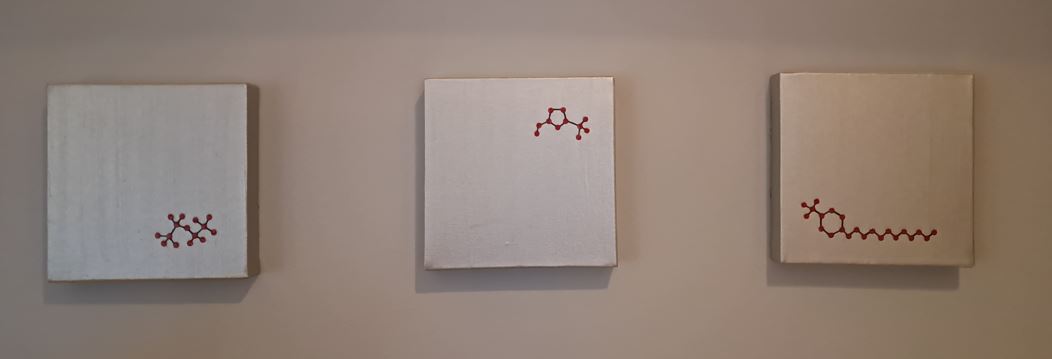
<p>Another example of functional binders is conducting polymers. They are designed to combine the electronic conductivity of the usually used carbon black and the mechanical properties of the binder. This can increase the energy density as we can reduce the amount of inactive materials in the cells. Conducting polymers consist of a backbone with a conjugated structure. This means that they have alternating single and double bonds, which allows electrons to move along the polymer chain, and also hop from one chain to another. Materials like poly(3,4-ethylenedioxythiophene):poly(styrene sulfonate) (PEDOT:PSS) and polyaniline are examples of conducting polymers. Polyaniline is my “old friend” as it was one of the main materials I studied in my <a href="http://lib.tkk.fi/Diss/2010/isbn9789513874094/isbn9789513874094.pdf">doctoral thesis</a> about 15 years ago. I have even made paintings about some of the counter-ions I used for polyaniline, and those are still hanging on our dining room wall:</p>

<p><img src="https://makavi.github.io/images/PANI.JPG" width="80%" /></p>

<p>Back then I did not even realise that these materials could be used also in batteries! Now I’m very happy that we are exploring the use of conducting polymers in solid-state batteries in the <a href="https://thesolidproject.eu/objectives/">SOLiD project</a>. Maybe I should start working with them even more, as I know quite well how their properties and processability can be tuned 😊</p>

<h2 id="separators">Separators</h2>
<p>Then, another part where polymers are used in batteries is the separator, which allows ions to flow through it but works as an electrical insulator between the electrodes. The most common separator type is a porous polypropylene (PP) or polyethylene (PE) membrane. PP and PE work relatively well as a separator in standard Li-ion batteries. However, some special/novel electrolytes might require surface treatment for the PP/PE to allow sufficient wetting and thus ionic conductivity.</p>

<p>Another separator material is cellulose. It is also a polymer, but a natural one. Cellulose is not (yet) used in commercial batteries that much, but I see high potential for it. Its wetting properties are superior, and it has also very good thermal stability. Being also a sustainable option, I hope and believe that we will see much more cellulose separators in batteries in future.</p>

<p>A separator can have self-healing properties too. We just finished a European project called HIDDEN, where we developed a self-healing piezoelectric separator that slowed down the dendrite growth in batteries with a metallic lithium anode. This helped to increase the lifetime by 65 % in the best case. The best results were achieved in coin cells, but we saw also some improvement in <a href="https://chemistry-europe.onlinelibrary.wiley.com/doi/10.1002/batt.202300591">pouch cells</a>. This means that up-scaling of the processing requires still more work, but in principle the idea seems to work.</p>

<h2 id="electrolytes">Electrolytes</h2>
<p>The electrolyte in a conventional Li-ion battery is a lithium salt, dissolved in an organic solvent. However, solid-state batteries have a solid electrolyte instead, and often it is an ionically conducting polymer or a blend of polymer and ceramic particles. A solid electrolyte allows using a metallic lithium anode, which enables increased energy density. Fully ceramic solid electrolytes do also exist, but here I focus only on the polymeric ones.</p>

<p>The main benefits of using a polymeric electrolyte include its intrinsic safety (no flammable solvents), relatively easy processing, mechanical roughness, and flexibility. However, there are still challenges, as most of the polymers have modest ionic conductivity especially at room temperature and they might thus require heating the battery to 50-60 degrees Celsius to work properly. Better and more ionically conducting polymers are being actively developed.</p>

<p>Usually, the ionically conducting polymer is mixed with a Li-salt. Here the polymer functions as a matrix for the Li-salt. In the matrix, the mobility of the Li+ cation is much lower compared to the anion, which leads to a so-called concentration polarization. This means that the anions accumulate on the cathode side during charging, and the lithium electrode interface thus lacks anions, which will generate a strong electric field, eventually leading to growth of dendrites due to uneven deposition of lithium on the negative electrode. And dendrites, as we know, are detrimental to the battery. But it is also possible to synthetize polymers, which have the anionic counterpart covalently bound to the polymer backbone and only the Li+ cation is moving. These are called single-ion polymer electrolytes. They allow better dendrite prevention as the anion cannot move, and thus there won’t be a depletion of anions at the lithium anode interface.</p>

<h2 id="active-materials">Active materials</h2>
<p>Finally, one very interesting option of using polymers in batteries is to use them as the active material. This is important especially due to sustainability aspects, as we would not need that much mining if we could use polymers to replace critical battery raw materials – at least in some applications. These materials can be even synthetized from bio-based sources and in the best case from waste/side streams.</p>

<p>There are still challenges with organic active materials. Most of them are related to their stability, as they may e.g., dissolve into the electrolyte. This is of course a problem and would decrease the lifetime significantly. They also do not have as high volumetric energy density as the inorganic ones, but they could be very much suitable for applications where this is not a problem.</p>

<p>We are studying organic cathode active materials in batteries in one Finnish project, <a href="https://www.finnceres.fi/post/transferring-bio-based-materials-into-batteries">FinnCERES</a>. The research is still mainly focused on lab-scale studies, both in our work and globally, and up-scaling needs to be still demonstrated. However, there is high potential for organic materials, as also summarized in recent publications e.g., by <a href="https://chemistry-europe.onlinelibrary.wiley.com/doi/full/10.1002/batt.202300090">Alexandru Vlad et al.</a> and <a href="https://pubs.acs.org/doi/10.1021/acs.chemmater.3c02408">Jan Bitenc et al.</a></p>

<h2 id="conclusions">Conclusions</h2>
<p>As we can see, polymers are already used in several parts in a battery. I mentioned here only such polymers, which are used inside a battery cell. But there are much more examples for the use of polymeric materials also at the module and pack level, such as in casings.</p>

<p>Even though the polymers are working relatively well already, there is still more work and research to be done to improve their properties. This can help to improve the sustainability and lifetime of both currently used and future battery chemistries. With the help of functional polymers, we can also overcome some of the challenges in increasing the energy density.</p>

<p>Thus, if you are familiar with polymers, why not consider using this knowledge in the battery field. There is still a lot of room and a clear need for more people to work with battery development.</p>]]></content><author><name></name></author><summary type="html"><![CDATA[The core of the Li-ion battery is the active material: on the cathode side this is for example a metal oxide, such as NMC (lithium nickel manganese cobalt oxide), and on the anode side e.g., graphite. However, batteries contain a lot of other materials too, and many of them are polymers. All these materials must work as planned and remain stable in the challenging operating conditions inside a battery. The polymeric materials have a major impact on the lifetime and even on the sustainability of a battery. Thus, they require as much attention as the other parts.]]></summary></entry><entry><title type="html">Women in battery research</title><link href="http://www.positiveenergyblog.com/2024/02/11/WomenAndBatteries.html" rel="alternate" type="text/html" title="Women in battery research" /><published>2024-02-11T00:00:00+00:00</published><updated>2024-02-11T00:00:00+00:00</updated><id>http://www.positiveenergyblog.com/2024/02/11/WomenAndBatteries</id><content type="html" xml:base="http://www.positiveenergyblog.com/2024/02/11/WomenAndBatteries.html"><![CDATA[<p>Today is the International Day of Women and Girls in Science. The goal of the day is to encourage more girls and women to take up jobs in the field of science, technology, engineering, and mathematics (so called STEM fields). We need all genders to work together to reach the <a href="https://sdgs.un.org/goals">sustainable development goals</a>.</p>

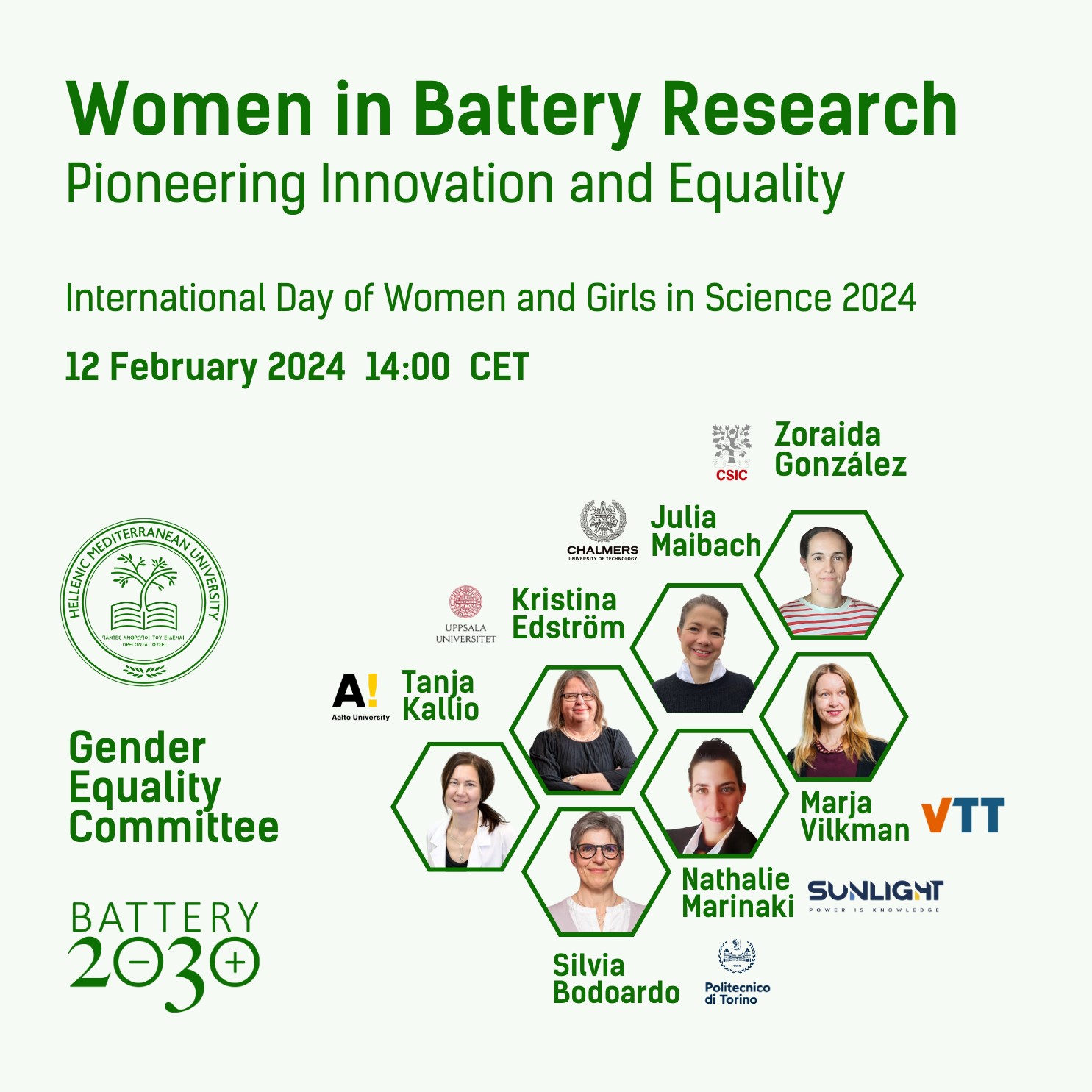
<p>I live in Finland, which is quite an equal country. Women and men should have equal possibilities here to work in the STEM fields, and I do not remember any clear problems in my career due to my gender. I was invited to give a presentation about women in battery research (it is on February 12th and the list of speakers is great, see the add below!). This got me reading and thinking about the topic a bit more. First, I thought that being a woman has not affected my selections and career. But I started to see some patterns.</p>

<p><img src="https://makavi.github.io/images/Battery_Poster.jpg" width="50%" /></p>

<h2 id="selecting-the-field-of-studies">Selecting the field of studies</h2>
<p>When I was in high school, I took only one mandatory course in physics and skipped several voluntary ones. Instead, I chose extra psychology, biology, and chemistry courses. I don’t know why, but I just did not feel that physics would be something for me.</p>

<p>When selecting where to study after high school, my first choice was studying biochemistry at the biology department at the Helsinki University. However, I did not get enough points in the final exams from the biology test. Thus, I would not get extra points for applying to the biology department. So, I chose to apply to the chemistry department at the Helsinki University of Technology instead (nowadays Aalto University). They had a biochemistry track there as well, and I did not need biology points to get in. Mathematics and chemistry were enough, and I knew I was good in those subjects.</p>

<p>I got in, but after starting my studies, I realised that I liked polymer technology topics a lot. Thus, I did not choose biochemistry as my major, I chose polymers. I also had planned to have organic chemistry as my minor topic, but after getting familiar with conducting polymers, I wanted to know more about their functionality and ended up having physical chemistry as my minor. I graduated from the chemistry department in 2002, and eventually ended up doing my doctoral studies at the physics department. Finally, I graduated from there in 2010, having a D.Sc. in physics!</p>

<p>It took me quite long to realize that physics is – and can be – for me.</p>

<h2 id="imposter-syndrome">Imposter syndrome</h2>
<p>There have been several studies about the imposter syndrome, and they often report that women are more prone to this feeling than men. I for sure have suffered from it as well. I still feel it, for example every time I push the publish button for a blog text. But I have learned not to care so much anymore. Getting older helps, and having a mentor for a while has helped me previously as well. But could we make it easier for younger people, so that they could avoid the feeling of being an imposter?</p>

<p>I copy here a quote from the <a href="https://hbr.org/2021/02/stop-telling-women-they-have-imposter-syndrome">Harvard Business review</a>: “The answer to overcoming imposter syndrome is not to fix individuals but to create an environment that fosters a number of different leadership styles and where diversity of racial, ethnic, and gender identities is viewed as just as professional as the current model.”</p>

<p>I think this is very well said. And I think we are already on a good path to reach this.</p>

<h2 id="being-a-mother-and-a-scientist">Being a mother and a scientist</h2>
<p>I had our first child while I was doing my doctoral studies. And the second child right after my dissertation. I was 8 months pregnant then, as you can see from this image from the dissertation dinner:</p>

<p><img src="https://makavi.github.io/images/Dissertation3.jpg" width="60%" /></p>

<p>A supporting network has been extremely important. My parents, husband and his parents have enabled me to work towards my goals by helping to take care of the kids while they have been ill, and I have had to work. Or if I had to travel, they have helped with the logistics from daycare to home and hobbies etc.</p>

<p>Working in a lab while pregnant also brings some challenges. For example, it is not allowed to work with some chemicals. I have been very lucky in finding a work environment where this has not been a problem. Both my teams at VTT and Aalto University arranged the work so that I could feel safe and productive, getting help from colleagues when needed. And I was able to return to the lab easily after the maternity leaves, to continue my studies and work. For me, being pregnant also gave me an extra motivation to finalize my thesis, as I had a clear DL 😊</p>

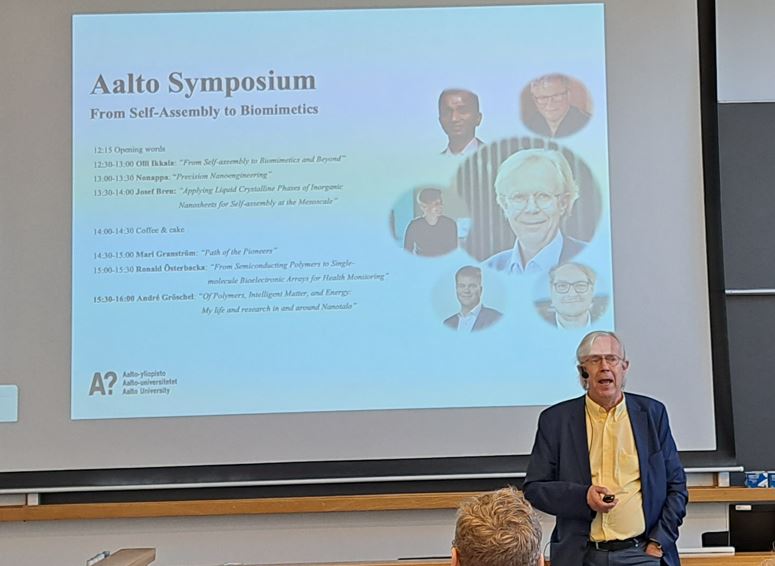
<p>I was not the only one to have a baby while studying. I still remember that my professor, Olli Ikkala, once said something like “It looks that we will have more babies than papers this year in our group”, in a very positive tone. And it was not just “ok”. It was celebrated! But I have heard from some collaborators outside Finland that having a baby while doing doctoral studies would have been impossible for them. Thus, I understand that it is not always this easy.</p>

<h2 id="sense-of-belonging">Sense of belonging</h2>
<p>I have already written in my <a href="https://www.positiveenergyblog.com/2022/04/28/firstblog.html">first blog text</a> about how I ended up working with batteries. It took me a while to find this field, but I’m very happy that I finally found it. It feels like home now.</p>

<p>And I realize that this feeling is something that I did lack before, when making decisions about my studies. I had the skills, I had the passion, but I did not feel that selecting a technical field is something I should/could do. I just found one Finnish <a href="https://arrow.tudublin.ie/sefi2023_respap/38/">research paper</a>, which gave a good term for this feeling: “Sense of belonging”. This is exactly what I was missing as young, when I felt that physics is not for me.</p>

<p>I also realize that this “sense of belonging” is something that has been clearly present in the Battery 2030+ community where I have had the pleasure to work in when coordinating the <a href="https://hidden-project.eu/">HIDDEN project</a>. Prof. Kristina Edström and her team made it very clear from the start that I am welcome, and I belong here.</p>

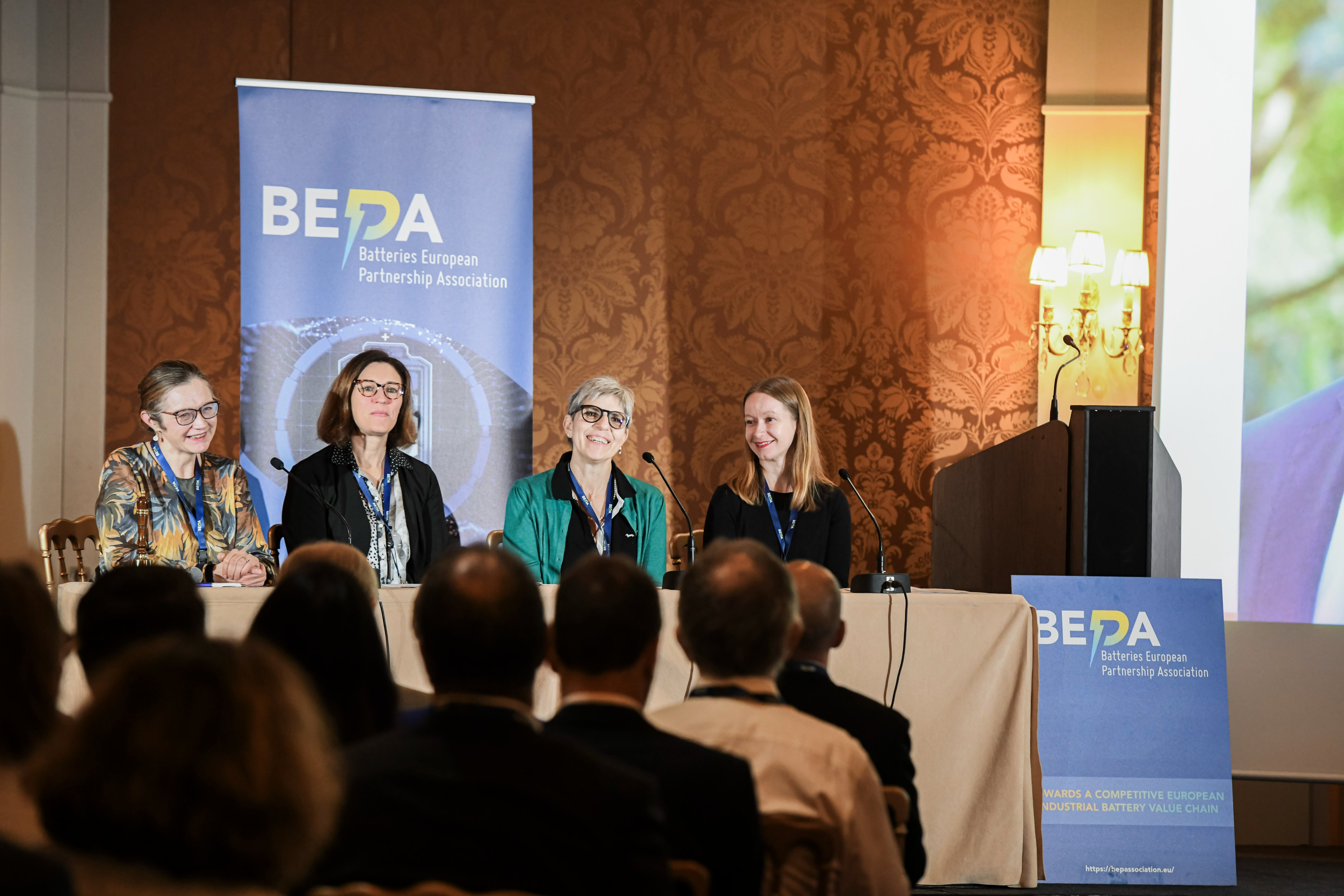
<p>I believe that this feeling also encouraged me to apply for the research chair position in <a href="https://bepassociation.eu/our-work/technical-working-groups-and-supporting-task-forces/">BEPA</a>, and partly helped me to overcome my imposter syndrome. I did not even mention about my plans to anyone in Battery 2030+ before applying, but I felt the support anyway. This is very precious, and I want to thank the whole Battery 2030+ initiative for all your support. And the BEPA network has been very inclusive as well! We recently even had an all-female-panel in the General Assembly meeting last November 😊</p>

<p><img src="https://makavi.github.io/images/AllFemalePanel.jpg" width="60%" /></p>

<h2 id="conclusions">Conclusions</h2>
<p>In my view, equality is not just about equal possibilities. At least in Finland, technically speaking, everything is possible for women. It is about feeling that we belong here, in the STEM field. And this is why we still need to arrange days like the International Day of Women and Girls in Science.</p>

<p>It is very important to have diversity in the research teams and industry. And not just regarding gender. We need people with different nationalities, age, personalities, and experience. For example, I come from a country where we have cold winters and understand very well that electric vehicles need to be designed to function also when it is 20 degrees or more below zero Celsius, and when your car is covered with ice and snow. But I might not realize very well which kind of problems, needs and opportunities there are in extremely hot environments.</p>

<p>Battery research, like many other fields, requires so many different skills that we always need a diverse team to achieve the best outcome. We can encourage different people to join this field by being visible, having role models, mentoring, and showing that everyone is welcome, and everyone is needed. And of course, by creating an inclusive working environment.</p>]]></content><author><name></name></author><summary type="html"><![CDATA[Today is the International Day of Women and Girls in Science. The goal of the day is to encourage more girls and women to take up jobs in the field of science, technology, engineering, and mathematics (so called STEM fields). We need all genders to work together to reach the sustainable development goals.]]></summary></entry><entry><title type="html">Energy and power</title><link href="http://www.positiveenergyblog.com/2024/01/08/Energy.html" rel="alternate" type="text/html" title="Energy and power" /><published>2024-01-08T00:00:00+00:00</published><updated>2024-01-08T00:00:00+00:00</updated><id>http://www.positiveenergyblog.com/2024/01/08/Energy</id><content type="html" xml:base="http://www.positiveenergyblog.com/2024/01/08/Energy.html"><![CDATA[<p>As we are again starting a new year, it is good to look back, have a break, learn from the past, and make plans for the coming months. I did it by thinking about energy and power. Maintaining high energy and power levels is equally important for batteries and people.</p>

<p>There is a difference between energy and power. So, let’s first clarify what energy and power density mean in the context of batteries.</p>

<h2 id="definition-of-energy-and-power-density">Definition of energy and power density</h2>
<p>Energy density means that how much energy can be stored per unit mass or volume. Its unit is Wh/kg or Wh/l. If I want to drive for a longer time without charging my electric vehicle, I either need a heavier battery with the same energy density, or a higher energy density battery.</p>

<p>Power density means that how fast a battery, or another energy storage component, can deliver energy. It has a unit of W/kg or W/l. Supercapacitors are an example of a device with high power density. They can provide energy quickly for short times, having a response time of milliseconds. Their charging is also much faster than for batteries.</p>

<p>It is common to use a “Ragone plot” to visualize energy and power densities of different types of energy storage components, and/or the energy-power characteristics of a single energy storage device. Simply said, the plot is a graph showing the relationship of energy and power density. But there are different ways of drawing the graph and it might be difficult, and in the worst case, misleading, to compare different graphs if they are not prepared similarly. Some graphs show single (nominal/average) points, some a range, and some a curve. Some show values for battery materials, some for a cell and some for a battery pack.</p>

<p>I encourage you to read a recent <a href="https://www.sciencedirect.com/science/article/pii/S2352152X23024957">review</a> about the topic. The review also lists best practises and guidelines for preparing Ragone plots.</p>

<h2 id="how-to-maintain-high-level-of-energy">How to maintain high level of energy</h2>
<p>If you look at a typical Ragone plot, you notice that it is not possible to have high energy and power density at the same time. When energy is consumed fast, there are always losses, and the fast pace cannot be maintained for a long time.</p>

<p>It is good to remember this also as individuals. Sometimes we need to push and work hard, but if we continue it for too long, we run out of energy. Fast charging might help for a while, but eventually it damages both the battery and the people. This might lead to a complete breakdown, and it will be more challenging to get the energy levels back again.</p>

<h2 id="optimizing-the-energy-and-power-density">Optimizing the energy and power density</h2>
<p>Batteries are optimised to have either high energy or power density. Typically, a Li-ion battery has an energy density of 150-300 Wh/kg, or 300-700 Wh/l. The energy density of a Li-ion battery can be fine-tuned by modifying the cathode material: lithium iron phosphate (LFP) has lower energy density than for example lithium nickel manganese cobalt oxide (NMC).</p>

<p>A more substantial increase can be achieved by changing the porous graphite anode to silicon, metallic lithium, or ultimately, to a so called “zero excess lithium” anode – sometimes referred to as an anode-free structure. At the same time, the electrolyte is usually changed to a solid one. This is since metallic lithium is not stable enough when a liquid electrolyte is used (unless some special self-healing methods are used, like the piezoelectric separator, which we are developing in the <a href="https://hidden-project.eu/">HIDDEN</a> project).</p>

<p>On the other hand, high power density can be achieved for example by adding more conductive additives, such as carbon black or carbon nanotubes, into the electrode layers. This will increase the electronic conductivity and allow higher currents to flow in the electrodes. Using thinner electrodes helps as well as the electrons and ions will need to travel a shorter distance, which is faster. As both methods increase the mass of inactive materials (carbon black or current collector) vs. active materials, they decrease the energy density of the cell.</p>

<p>Again, the same applies for people. A professional marathon runner typically has a different body type as a sprinter.</p>

<h2 id="my-professional-goals-for-2024">My professional goals for 2024</h2>
<p>My goals for year 2024 are clear. I want to ensure that we can make batteries with high energy density – of course not forgetting the sustainability.</p>

<p>This means that I will do my best to create batteries that are able to utilise the metallic lithium anode. Our HIDDEN project will end soon, and we are just finalising the work to develop self-healing methods to prevent dendrite growth, which is a common problem with the lithium anode. The results are (finally!) looking amazing, and I can’t wait to tell you more about those. You can join our <a href="https://hidden-project.eu/final-event-hidden-bat4ever/">final dissemination event</a> in Brussels on January 31st to hear the latest news, or otherwise you need to wait until we get the results published 😉 The event is arranged jointly with the <a href="https://bat4ever.de/WordPress/">BAT4EVER</a> project and <a href="https://battery2030.eu/">Battery 2030+</a> and I can guarantee that the program is super good!</p>

<p>In addition, we have also the <a href="https://thesolidproject.eu/">SOLiD</a> project ongoing. There we have just made the first cathodes by solvent-free methods. During 2024, we will continue the work to optimize and combine them with the polymeric electrolyte and the metallic lithium anode, targeting eventually energy densities of 900 Wh/l.</p>

<p>Sustainability is a must. And there are several ways to handle that. We aim at minimising the energy consumption in battery manufacturing, e.g., by the solvent-free coating methods in the SOLiD project, which I described in my previous blog text. In addition, increased lifetime, which is a target both in HIDDEN and SOLiD, will help to utilize the battery materials in the best possible way.</p>

<p>On the other hand, we also look for and develop alternative and more abundant materials and their processing methods, such as Na-ion battery materials and biobased carbon materials. With my work at <a href="https://bepassociation.eu/">BEPA</a>, being the research chair of the Raw Materials and Recycling group, I also aim at preparing the best possible conditions and calls for researchers around Europe to be able to develop recycling methods and sustainable raw materials for the current and future battery chemistries.</p>

<h2 id="my-personal-goals-for-2024">My personal goals for 2024</h2>
<p>Then, regarding myself, I need to increase my power density – and at the same time reserve enough time for charging and recovery. I realized this as I managed to get a stress injury from running before Christmas. A physiotherapist just told me that I should get more power into my running muscles to prevent injuries. And he reminded me about the balance between work, training, and life in general. If there are too many things going on at the same time, the body and mind do not have time to recover. Easy to understand but so hard to remember in practice.</p>

<p>In any case, I’m happy that I finally asked for help from a professional. I now know what to do at the gym, and can hopefully balance my training, work, and rest better. The same approach, asking for advice, applies to research. We are never experts in everything, it is challenging to solve problems alone, and it is ok to ask for help.</p>

<p>And in the end, about sustainability. A few weeks ago, I joined a training at VTT, called “Sustainable pace at knowledge work”. The trainer told many tips, and he also said that he has a habit of doing a short yoga practice each morning. I have been “dreaming” about this for a long time but never actually done it on a regular basis (as I like to sleep late 😊). But now I decided that I will take this habit as a priority. I will give it a try as it will help me to avoid/cope with both physical and mental stress. And if I promise that here in public, it will help me to keep up with the habit.</p>]]></content><author><name></name></author><summary type="html"><![CDATA[As we are again starting a new year, it is good to look back, have a break, learn from the past, and make plans for the coming months. I did it by thinking about energy and power. Maintaining high energy and power levels is equally important for batteries and people.]]></summary></entry><entry><title type="html">Extrusion coating reduces emissions from battery manufacturing</title><link href="http://www.positiveenergyblog.com/2023/12/09/Extrusion.html" rel="alternate" type="text/html" title="Extrusion coating reduces emissions from battery manufacturing" /><published>2023-12-09T00:00:00+00:00</published><updated>2023-12-09T00:00:00+00:00</updated><id>http://www.positiveenergyblog.com/2023/12/09/Extrusion</id><content type="html" xml:base="http://www.positiveenergyblog.com/2023/12/09/Extrusion.html"><![CDATA[<p>Batteries are a key to cut down the man-made carbon dioxide emissions. Electric vehicles are already a cleaner option compared to gasoline cars. However, production of batteries requires energy. It is important to minimize the energy consumption throughout the whole battery value chain. This way the CO2 payback time can be minimized. We can still improve.</p>

<p>In this blog text, I want to introduce one method, which shows high potential to reduce the CO2 emissions from cell manufacturing – dry extrusion coating. But let’s first check the big picture about emissions.</p>

<h2 id="sources-of-co2-emissions">Sources of CO2 emissions</h2>
<p>CO2 emissions from battery manufacturing come from mining and refining, production of active materials, and cell manufacturing. The exact amounts of emissions depend on the cell chemistry and on the country where the materials are mined, and cells produced. The more renewable energy is available, such as in the Nordic countries, the lower the emissions are. For more details, you can read a nice <a href="https://www.sciencedirect.com/science/article/pii/S0921344922004402">paper</a> by Chengjian Xu et al. about the calculations for several Li-ion battery chemistries, showing the status in year 2020 and scenarios for years 2030-2050.</p>

<p>Note that in the case of Na-ion batteries, the emissions are much lower. Björn Mårlid, the CEO of Altris, gave a presentation last month in the <a href="https://www.accelevents.com/e/battery-innovation-days-2023">Battery Innovation Days</a>. He said that Na-ion batteries have 3 times lower emissions from the extraction of raw materials, when compared to Li-ion batteries. His estimation was that the CO2 emissions from Na-ion battery manufacturing will be as low as 4 kg CO2/kWh in 2030. For Li-ion batteries, the estimations land between 15 and 40 kg CO2/kWh in 2030.</p>

<p>In short, raw materials (from mining to active material production) cause a major part of the CO2 emissions, especially in the case of Li-ion batteries. But cell manufacturing is not insignificant either. Currently, about 25% of the emissions come from cell manufacturing.</p>

<h2 id="how-battery-electrodes-are-currently-produced">How battery electrodes are currently produced</h2>
<p>The battery electrodes are currently mostly produced by slot die coating. It means that we have a slurry of active materials and additives in a solvent. For the cathode active materials, the solvent is usually N-methylpyrrolidone (NMP). NMP is used since the common binder material, polyvinylidene fluoride (PVDF), does not dissolve in many other solvents. It is a toxic solvent, and it has a high boiling point. The workers and the environment need to be protected from the chemical, and drying of the electrode layer after coating requires a lot of energy.</p>

<p>Some producers also use water-based slurries, which are safer to use and more sustainable. However, they also need to be dried. And water-based slurries become challenging if we increase the nickel content, and thus sensitivity, in the cathode active material.</p>

<h2 id="ways-to-minimize-the-co2-emissions">Ways to minimize the CO2 emissions</h2>
<p>There are several ways to reduce the CO2 emissions from battery manufacturing. We can reduce the scrap rate during cell manufacturing, use raw materials with lower carbon footprint, use lower temperatures in processing and energy efficient production methods. And of course, we should use renewable energy as much as possible.</p>

<p>And note, also the new <a href="https://environment.ec.europa.eu/news/new-law-more-sustainable-circular-and-safe-batteries-enters-force-2023-08-17_en">batteries regulation</a> requires that the carbon footprint of batteries should be reported and minimized.</p>

<h2 id="dry-extrusion-coating">Dry extrusion coating</h2>
<p>In any case, and regardless of the chemistry, it is mandatory to coat the battery electrode electrodes. This requires energy. Thus, developing energy efficient processing methods is a chemistry neutral way to decarbonize the battery value chain. Even if we are not sure that which cell chemistries will be used in future, we can and should think about how to produce the electrodes in a sustainable way.</p>

<p>Dry extrusion is one of the promising methods to minimize energy consumption in electrode coating. Drying and solvent recovery can cause <a href="https://www.sciencedirect.com/science/article/pii/S258900422100300X">close to 50% of the energy consumption</a> in the cell manufacturing step. Thus, if we can eliminate the use of solvents, we will increase the sustainability of processing.</p>

<p>The extrusion process for electrodes consists of a few stages: dry mixing of the materials inside the extruder, dry coating on the current collector, calendering, and slitting/cutting into a correct shape. The method is especially suitable for solid-state batteries with polymer electrolytes. The polymer electrolyte can even function as a binder, further increasing the energy density. This is something we are developing in the ongoing European <a href="https://thesolidproject.eu/">SOLiD project</a>. We just got our first cells tested, using a cathode prepared fully without solvents! And it worked quite nicely 😊</p>

<p>Examples like this keep me motivated. The story started a couple of years ago when I realized that we have a group at VTT who is very experienced in extrusion coating and who have extrusion equipment from lab to pilot scale. I then contacted them and proposed to join our forces and use this equipment for making battery electrodes. We decided to build a consortium around this and other ideas and applied for European funding. Luckily, our project was selected to be funded. And now we start seeing the results.</p>

<p>(As a side note, it does not usually go so smoothly. I have several rejected proposals saved under my “Proposals” folder. And many ideas that are still waiting to be funded, or perhaps forgotten.)</p>

<h2 id="conclusions">Conclusions</h2>
<p>I see dry extrusion coating as one of the methods to reduce emissions from battery manufacturing. It is not yet widely in use in industry, but for example <a href="https://www.blue-solutions.com/en/battery-technology/#factory-and-production-process">Blue Solutions</a> is already using it for solid-state battery manufacturing. I believe others will follow.</p>

<p>In addition to the lower energy consumption, extrusion coating can offer also other benefits. These include avoiding toxic solvents and the ability to make thicker electrodes without cracking. Thicker cathode layers help to increase the energy density, which is important especially for the mobility applications. Also, the production cost can be lowered. A recent <a href="https://pubs.rsc.org/en/content/articlelanding/2023/ee/d2ee03840d">paper</a> and a <a href="https://www.sciencedirect.com/science/article/pii/S259023852200011X">review</a> gave a few examples and summarized the benefits nicely.</p>]]></content><author><name></name></author><summary type="html"><![CDATA[Batteries are a key to cut down the man-made carbon dioxide emissions. Electric vehicles are already a cleaner option compared to gasoline cars. However, production of batteries requires energy. It is important to minimize the energy consumption throughout the whole battery value chain. This way the CO2 payback time can be minimized. We can still improve.]]></summary></entry><entry><title type="html">Mining: Good or bad?</title><link href="http://www.positiveenergyblog.com/2023/11/08/mining.html" rel="alternate" type="text/html" title="Mining: Good or bad?" /><published>2023-11-08T00:00:00+00:00</published><updated>2023-11-08T00:00:00+00:00</updated><id>http://www.positiveenergyblog.com/2023/11/08/mining</id><content type="html" xml:base="http://www.positiveenergyblog.com/2023/11/08/mining.html"><![CDATA[<p>I participated in a panel discussion a couple of weeks ago, where we talked about battery minerals and mining. The discussion was in Finnish, and you can find it in the <a href="https://www.youtube.com/watch?v=yYPS1Sodjgk">Tiedekulma YouTube channel</a>. Inspired by the event, I decided to write this blog about mining.</p>

<p>Mining has been at least in Finland a topic that has raised a lot of concerns. But on the other hand, without mining we do not have the minerals that are needed for the green transition and to cut down the greenhouse gas emissions. So, is mining good – or is it bad?</p>

<h2 id="why-we-need-minerals">Why we need minerals</h2>
<p>Several minerals are needed to build for example batteries that are the key to reduce the carbon dioxide emissions from transportation. Transportation causes one sixth of the global greenhouse gas emissions. Thus, electrifying the transportation, which means using electric vehicles (EVs) instead of internal combustion engine vehicles, can significantly help to cut down the emissions. Batteries are also need for stationary storage applications to store energy from wind and sun.</p>

<p>Recent news regarding the global warming have shown that we need to cut down the emissions quickly. After a steady rise of temperatures during the past decades, year 2023 has been <a href="https://academic.oup.com/bioscience/advance-article/doi/10.1093/biosci/biad080/7319571">exceptionally warm</a>.</p>

<h2 id="which-minerals-are-needed-for-batteries">Which minerals are needed for batteries</h2>
<p>Batteries require materials such as lithium, graphite, cobalt, nickel, manganese, iron, phosphorous, copper, and aluminium. But not all batteries are the same. Let’s, for simplicity, focus on the EV batteries. The highest energy density batteries in EVs are so called Li-NMC batteries, which use lithium, nickel, manganese, and cobalt on the cathode side. Another common battery type in EVs is the LFP battery, which uses lithium iron phosphate as the cathode. The LFP battery does not have as high energy density. Thus, the range is shorter. However, LFP batteries are cheaper than NMC batteries, which makes them more and more popular.</p>

<p>Even though the battery chemistry might vary a bit, all the currently used EV batteries have two electrode materials in common. They all use at least lithium and graphite.</p>

<h2 id="where-do-the-battery-minerals-come-from">Where do the battery minerals come from</h2>
<p>Most of the battery minerals come from underground. For example, lithium can be extracted either from brine deposits or from mineral ores. Brine deposits are concentrated water deposits, which are pumped on the surface of Earth where the water is evaporated away over months or even years. The remaining highly concentrated brine will be then used to prepare lithium with different chemical treatments and filtering steps. Mineral ores are hard rock materials, which are mined. They have often a higher concentration of lithium than the brine, but the processing costs are higher due to mining.</p>

<p>Let’s then look at graphite, which is the other electrode material (in addition to lithium) that is currently always used in EV batteries. The graphite used in batteries can be either natural or synthetic. Both materials consist of well-organized layers of graphene sheets. Natural graphite is a natural element mineral, and it is mined. Synthetic graphite is produced by graphitizing amorphous carbon, which is derived for example from petroleum.</p>

<p>Currently, most of the battery materials are primary materials, which means that they have not been used in batteries before and come from mining and extraction from the ground. The goal is to gradually increase the amount of recycled materials in batteries. These are called secondary materials. But we do not yet have enough end-of-life batteries to provide raw materials for all the new batteries. Thus, for the next 20 years or so, we need to get a substantial amount of materials from mines.</p>

<p>Europe mines and refines only a minor part of the materials that we use for battery production. Graphite comes mainly from China, and lithium in large part from South America and Australia. There is only one lithium mine in Europe, which is in Portugal. Another lithium mine will start in a couple of years in Finland.</p>

<h2 id="concerns-about-mining">Concerns about mining</h2>
<p>Even though modern mining is planned to actively mitigate negative effects, mining is not unproblematic. Mines clearly change the landscape, which already disturbs the scenery visually. But there are also other effects.</p>

<p>For example, lithium extraction from brines consumes large volumes of water. As described in a recent <a href="https://www.nature.com/articles/s43017-022-00387-5">publication</a>, as much as 90% of the original water is lost during the evaporation process, and fresh water is needed also in multiple steps in the refining process. There has been also news about soil and water contamination due to mines.</p>

<p>Also, social concerns exist. The known, but unfortunately not the only example of social issues, is mining of cobalt in Kongo. We have seen images of children working in cobalt mines and the working conditions are horrible even for adults.</p>

<h2 id="concerns-about-not-mining-in-europe">Concerns about not mining (in Europe)</h2>
<p>So, since mining is problematic, is it only a good thing that Europe does not have many mines? Well, not really. If we would have more mines in Europe, we could control the working and environmental safety conditions better. We could make sure that mining is done according to ethical standards.</p>

<p>Without mines, Europe is also heavily dependent on minerals from other continents. There are risks in supply and the recent years have shown that the supply chains can be very vulnerable. European electric car industry will suffer if the supply chains for battery materials are not working.</p>

<p>One example of potential issues is the <a href="https://www.reuters.com/world/china/china-require-export-permits-some-graphite-products-dec-1-2023-10-20/">recent announcement</a> that China will tighten the export of graphite materials. As China refines 90 % of the graphite used worldwide, this can be a big problem for Europe.</p>

<p>Europe is taking actions to overcome these issues. The recently published Critical Raw Materials Act is targeting to increase critical raw material production in Europe to cover 10 % of the EU’s annual consumption for extraction and 40 % for processing of critical minerals by 2030. In practise, this means for example faster permitting processes. And to clarify, faster permitting does not mean less strict permissions. It means that we should have more people working with the permissions or find other methods to reduce the waiting times.</p>

<h2 id="how-much-mining-is-needed">How much mining is needed</h2>
<p>I have heard estimations that the need for mining for the green transition is less than is needed if we continue as usual and use for example coal for heating and generating electricity. Recently, there was a <a href="https://www.sciencedirect.com/science/article/pii/S2542435123004117?dgcid=author">publication</a> about this topic. The authors had calculated that the annual amount of ore extracted in 2021 was 12.5 Gt, and it could be reduced by 45 % if we succeed in the green transition. This is since we do not need to have as many coal mines anymore.</p>

<h2 id="conclusions">Conclusions</h2>
<p>So, we need mining. Otherwise, it is not possible to make for example Li-ion batteries and reduce the greenhouse gas emissions, and we will see temperatures rising. But we can do our best to reduce the need for mining.</p>

<p>The simplest, but anyway challenging option, is to consume less. We should carefully consider if we need new “things”, or could we use a bicycle or public transportation instead of a car, or could we lower the room temperatures at home during winter (and if you are using air conditioning during summers, how cool temperatures you need?). All this will help to slow down the climate change. And this gives more time for the researchers and industry to develop methods for clean and sustainable energy production and storage.</p>

<p>We should also use the critical materials wisely. It does not make sense to use especially high energy density Li-ion batteries for stationary energy storage, where the size and weight of the battery is not very critical. Na-ion batteries or flow batteries would be good options for stationary storage applications. Of course, recycling is a must. And methods to increase the battery lifetime are relevant too.</p>

<p>We have no time to wait. And not a single solution that will solve the climate crisis.</p>

<p>But what all of us can do, starting today, is indeed to consume less. It does not have to make life boring. For example, I am testing if I can use the same dress every day. Fast fashion has a significant carbon footprint too! I have been now wearing the same black dress at work for more than two months. And it has worked perfectly! It is made from wool, and kind of even cleans by itself when I leave it hanging outside for the night. And I do not have to use energy to think what to wear (even if I will end up in YouTube 😉). I think nobody has even noticed that I wear the dress all the time.</p>

<p>Choose what works best for you.</p>]]></content><author><name></name></author><summary type="html"><![CDATA[I participated in a panel discussion a couple of weeks ago, where we talked about battery minerals and mining. The discussion was in Finnish, and you can find it in the Tiedekulma YouTube channel. Inspired by the event, I decided to write this blog about mining.]]></summary></entry><entry><title type="html">To plan or not to plan</title><link href="http://www.positiveenergyblog.com/2023/09/15/planning.html" rel="alternate" type="text/html" title="To plan or not to plan" /><published>2023-09-15T00:00:00+00:00</published><updated>2023-09-15T00:00:00+00:00</updated><id>http://www.positiveenergyblog.com/2023/09/15/planning</id><content type="html" xml:base="http://www.positiveenergyblog.com/2023/09/15/planning.html"><![CDATA[<p>Last Friday we celebrated the 70th birthday of Prof. Olli Ikkala in a symposium “From self-assembly to biomimetics”, and in an alumni event after that. This got me thinking of all the valuable lessons I learned from him in his group, Optics and Molecular Materials, while I was doing my PhD at Aalto University. Prof. Ikkala was the best supervisor I could ever hope for.</p>

<p><img src="https://makavi.github.io/images/Ikkala.JPG" width="50%" /></p>

<p>The event got me also thinking about something else: How people plan their career paths? Prof. Ikkala got a question from the audience, which was “How do you get all your ideas for research?”. And the answer was: “I have never planned what to do”. This answer made me very happy since I feel the same and I see from his work that this approach may lead to amazing science.</p>

<p>Good teachers and mentors are so important for students, and I feel lucky of being able to do my PhD under supervision of such a brilliant professor. Thus, I dedicate this blog to Prof. Ikkala, and give here a few examples about the topics I learned from him, and how I now use this knowledge in my research in the field of batteries.</p>

<h2 id="conjugated-polymers-and-their-self-assembly">Conjugated polymers and their self-assembly</h2>
<p>One of the main topics I studied during my PhD was conjugated polymers. They are polymers, which have alternating single and double bonds, and can thus have conducting or semiconducting properties. Conjugated polymers are tricky to process due to their rigid structure, but I learned from Prof. Ikkala how to dissolve or disperse them in solvents, how to characterize them and how to tune their properties. It was fascinating to also learn that polymers, block-copolymers, and different material blends can form self-assembled structures – and that it is possible to control this self-assembly even at nano- or micrometre scale.</p>

<p>This knowledge helped me for example to optimise the use of polymer blends as semiconducting materials in transistors after my PhD. In addition, I understood how mixtures of fullerenes and conjugated polymers behave and used those in organic solar cells.</p>

<h2 id="conducting-polymers-in-batteries">Conducting polymers in batteries</h2>
<p>Now, after jumping into the battery field a few years ago, I have realized that conducting polymers are very important for batteries as well. Of course, ionically conducting polymers can be used as the solid electrolyte. And conjugated polymers can be used as conducting additives in the electrodes. These are topics we are working with in the <a href="https://thesolidproject.eu/">SOLiD project</a>.</p>

<p>But when I was studying the structure and properties of liquid crystals in the group of Prof. Ikkala, I never imagined that I would end up using those in batteries! I learned then about the different liquid crystal structures, from nematic to gyroid. And now we use these materials as self-healing electrolytes in the <a href="https://hidden-project.eu/">HIDDEN project</a> to increase the battery lifetime. You never know which information will become useful in future.</p>

<h2 id="beyond-technical-knowhow">Beyond technical knowhow</h2>
<p>Besides the technical knowhow, I think the most important learnings from Prof. Ikkala are related to the way of thinking. I saw how curiosity and open mind can lead to great ideas. I realized that magic may happen when two different research fields are combined. Sometimes the most surprising inventions are created by combining ideas that are not usually combined, or even by mistake if you just keep exploring the unknown. I followed him taking inspiration from nature. And I understood the importance of building collaborations.</p>

<p>And even though I do not feel like an electrochemistry expert, which might be considered as a severe drawback in the battery research, I value all the different skills that a diverse background can bring. But I would not survive without my colleagues who know much more about batteries than me. This is the reason why I have built a brilliant team of electrochemists to work with me 😊</p>

<p>To come back to the initial question: To plan or not to plan. I think both ways are equally good and equally needed. It is up to everyone to decide, which approach feels the best. If you are lucky and have a clear plan, which you follow, that is great. But if you might sometimes drift a bit from topic to topic and decide where to go along the way, it can lead to as good outcome.</p>

<p>Most importantly, it is never too late to learn new skills. If you feel like trying, just go for it and dare to suck at first. In the academic world, it might slow down writing of publications for a while (yes, I personally know that this can happen 😉). But it is worth it if you are following your hearth.</p>

<p>PS. I copied the “Dare to suck” phrase from Instagram by Fatima Witick. She shares there great tips about taking care of your well-being with simple exercises (mainly in Finnish but sometimes in English too).</p>]]></content><author><name></name></author><summary type="html"><![CDATA[Last Friday we celebrated the 70th birthday of Prof. Olli Ikkala in a symposium “From self-assembly to biomimetics”, and in an alumni event after that. This got me thinking of all the valuable lessons I learned from him in his group, Optics and Molecular Materials, while I was doing my PhD at Aalto University. Prof. Ikkala was the best supervisor I could ever hope for.]]></summary></entry></feed>